
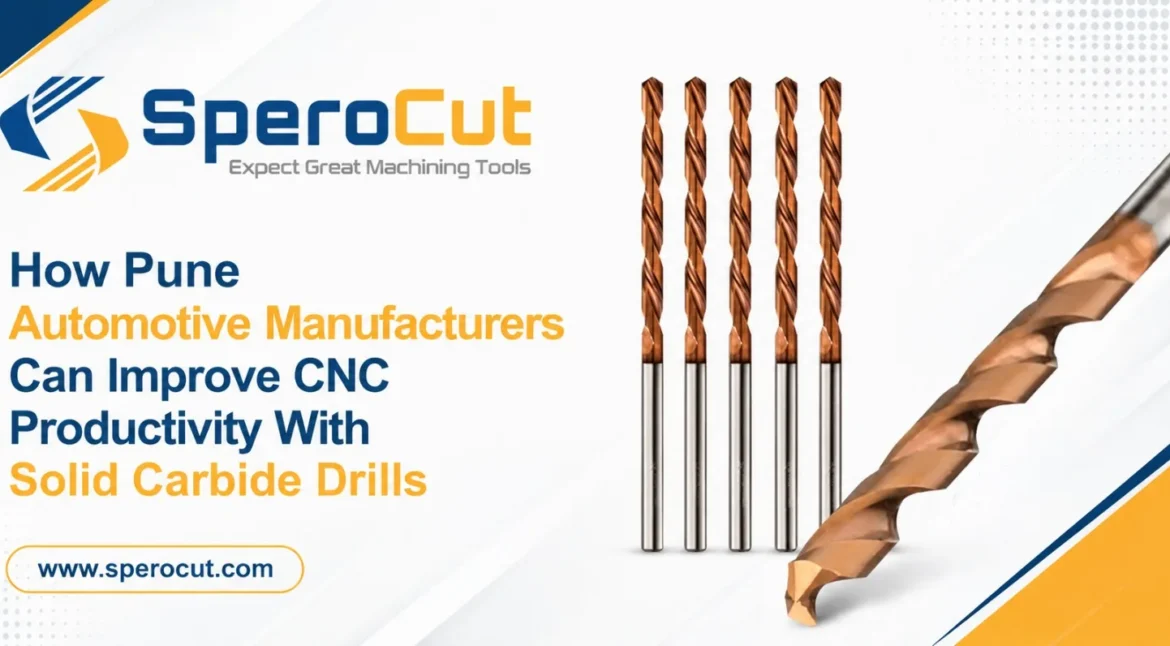
Pune has established itself as one of India’s most important automotive manufacturing hubs, housing numerous OEMs, Tier-1 suppliers, and precision engineering companies. As competition intensifies and customer expectations continue to rise, manufacturers are constantly looking for ways to improve productivity, reduce production costs, and maintain superior quality standards. One of the most effective ways to achieve these goals is by optimizing CNC machining operations with solid carbide drills.
For automotive manufacturers producing engine blocks, transmission housings, brake components, steering systems, and other critical parts, drilling operations play a significant role in overall cycle time and manufacturing efficiency. By adopting advanced solid carbide drills, companies can significantly improve machining performance, reduce downtime, and increase production output while maintaining exceptional accuracy.
The Growing Demand for High-Precision Automotive Manufacturing in Pune
Pune’s Position as an Automotive Manufacturing Hub
Pune is home to some of India’s leading automotive manufacturers and engineering companies. The region’s strong industrial ecosystem, skilled workforce, and advanced manufacturing infrastructure have made it a preferred destination for automotive production.
As electric vehicles, lightweight materials, and high-performance automotive systems become increasingly common, component manufacturers must achieve tighter tolerances and higher precision levels. This shift has placed greater pressure on CNC machining operations to deliver consistent results while maintaining productivity.
Why CNC Productivity Matters More Than Ever
In automotive manufacturing, every second saved on the production floor directly impacts profitability. CNC machines are significant investments, and maximizing their utilization is essential for maintaining competitiveness.
Common productivity challenges include:
- Frequent tool changes
- Excessive machine downtime
- Poor hole quality
- Tool breakage
- Inconsistent dimensional accuracy
- Increased scrap rates
Addressing these issues requires more than machine upgrades. Selecting the right cutting tools often delivers faster and more cost-effective improvements.
Understanding Solid Carbide Drills
What Makes Solid Carbide Drills Different
Unlike conventional High-Speed Steel (HSS) drills, solid carbide drills are manufactured from extremely hard tungsten carbide materials. This composition provides exceptional hardness, rigidity, wear resistance, and thermal stability.
Because of their superior material properties, solid carbide drills can operate at significantly higher cutting speeds while maintaining accuracy and tool life. Studies show that carbide tooling enables higher machining speeds and extended tool life compared to conventional tooling options.
Key Features of Modern Solid Carbide Drills
Modern solid carbide drills are engineered with advanced features designed specifically for high-performance CNC machining:
- Optimized flute designs
- Advanced wear-resistant coatings
- Superior heat resistance
- Enhanced chip evacuation capabilities
- High rigidity for precision drilling
- Reduced vibration during machining
These features help manufacturers achieve stable drilling performance even in demanding automotive materials such as alloy steel, cast iron, stainless steel, and aluminum alloys.
Common CNC Drilling Challenges Faced by Automotive Manufacturers
Tool Wear and Frequent Replacements
One of the biggest productivity killers in CNC machining is premature tool wear. Traditional drills often lose their cutting edge quickly when machining hard automotive materials. This results in frequent tool replacements, increased downtime, and higher operating costs.
Each tool change interrupts production, reduces spindle utilization, and affects overall throughput.
Poor Hole Accuracy and Surface Finish
Automotive components require highly precise holes for assembly, alignment, and performance. Inconsistent drilling can lead to:
- Out-of-tolerance dimensions
- Poor surface finishes
- Secondary finishing operations
- Increased rejection rates
When drilling hundreds or thousands of parts daily, even minor inconsistencies can create significant production challenges.
Machine Downtime and Reduced Throughput
Unexpected tool failures can stop production lines and create costly delays. Downtime not only affects productivity but can also disrupt delivery schedules and customer commitments.
For automotive manufacturers operating under strict production targets, minimizing downtime is critical.
How Solid Carbide Drills Improve CNC Productivity
Higher Cutting Speeds and Feed Rates
One of the primary advantages of solid carbide drills is their ability to operate at higher cutting speeds and feed rates. Their superior hardness and heat resistance allow manufacturers to remove material more efficiently while maintaining process stability.
Higher cutting speeds lead to:
Productivity Factor | Conventional Drills | Solid Carbide Drills |
Cutting Speed | Lower | Higher |
Feed Rate | Moderate | Higher |
Cycle Time | Longer | Shorter |
Productivity | Moderate | High |
This directly contributes to faster production cycles and increased output.
Longer Tool Life
Tool life has a significant impact on manufacturing costs. Solid carbide drills offer exceptional wear resistance, allowing them to remain sharp for longer periods.
According to industry data, carbide tools can deliver substantially longer service life than conventional alternatives while reducing tool change frequency.
Benefits include:
- Fewer tool replacements
- Reduced downtime
- Lower tooling costs
- Improved process consistency
Better Chip Evacuation
Chip evacuation is often overlooked but plays a crucial role in drilling performance. Poor chip removal can cause:
- Heat buildup
- Tool breakage
- Poor hole quality
- Surface damage
Modern solid carbide drills feature optimized flute designs that efficiently remove chips from the cutting zone. Improved chip evacuation helps maintain stable cutting conditions and prevents costly machining interruptions.
Enhanced Dimensional Accuracy
Automotive manufacturers rely on tight tolerances for safety-critical components. The high rigidity of solid carbide drills minimizes deflection during machining, resulting in greater dimensional accuracy and improved hole quality.
Advantages include:
- Consistent hole diameters
- Better positional accuracy
- Improved surface finish
- Reduced rework requirements
Applications in Automotive Component Manufacturing
Engine Components
Engine blocks, cylinder heads, and crankcase components require precise drilling operations. Solid carbide drills help manufacturers achieve high accuracy while maintaining fast production rates.
Transmission Parts
Transmission housings and gearbox components often involve drilling multiple holes in challenging materials. Solid carbide drills provide the stability and durability required for these demanding applications.
Chassis and Suspension Components
Suspension brackets, steering components, and structural parts require precision drilling to ensure proper assembly and long-term reliability. The superior performance of carbide tooling helps manufacturers meet these strict requirements.
Choosing the Right Solid Carbide Drill for CNC Operations
Material Considerations
Different automotive materials require different drill specifications. Manufacturers should consider:
- Cast iron
- Alloy steel
- Stainless steel
- Aluminum alloys
- Hardened materials
Selecting the correct drill grade ensures optimal performance and tool life.
Coating Selection
Advanced coatings improve wear resistance and thermal performance. Popular options include:
- TiAlN coatings
- AlCrN coatings
- Nano-performance coatings
These coatings help extend tool life while maintaining cutting efficiency.
Drill Geometry Optimization
The geometry of a drill directly affects machining performance. Important considerations include:
- Point angle
- Helix angle
- Flute design
- Margin configuration
Working with experienced tooling providers ensures the drill geometry matches the specific application requirements.
Why Manufacturers Are Switching to Advanced Solid Carbide Drills
Cost Per Hole Reduction
While solid carbide drills may have a higher initial purchase price, they often deliver a significantly lower cost per hole due to:
- Extended tool life
- Reduced downtime
- Higher machining speeds
- Lower scrap rates
This makes them a smart long-term investment for automotive manufacturers focused on profitability.
Improved Production Efficiency
A recent automotive case study reported a 43% increase in productivity and approximately three times longer tool life after switching to a carbide drilling solution.
For Pune-based automotive manufacturers, these improvements can translate into:
- Higher production capacity
- Better machine utilization
- Faster order fulfillment
- Increased competitiveness
Conclusion
As Pune’s automotive industry continues to evolve, manufacturers must embrace technologies that improve efficiency, precision, and profitability. Solid carbide drills have become an essential solution for modern CNC machining operations, offering superior cutting performance, longer tool life, better hole quality, and reduced production costs.
By selecting high-quality carbide drilling solutions from trusted tooling specialists such as Sperocut Tools, automotive manufacturers can maximize CNC productivity and stay ahead in an increasingly competitive market. Investing in advanced drilling technology today can lead to significant operational benefits, improved profitability, and sustainable growth tomorrow.